
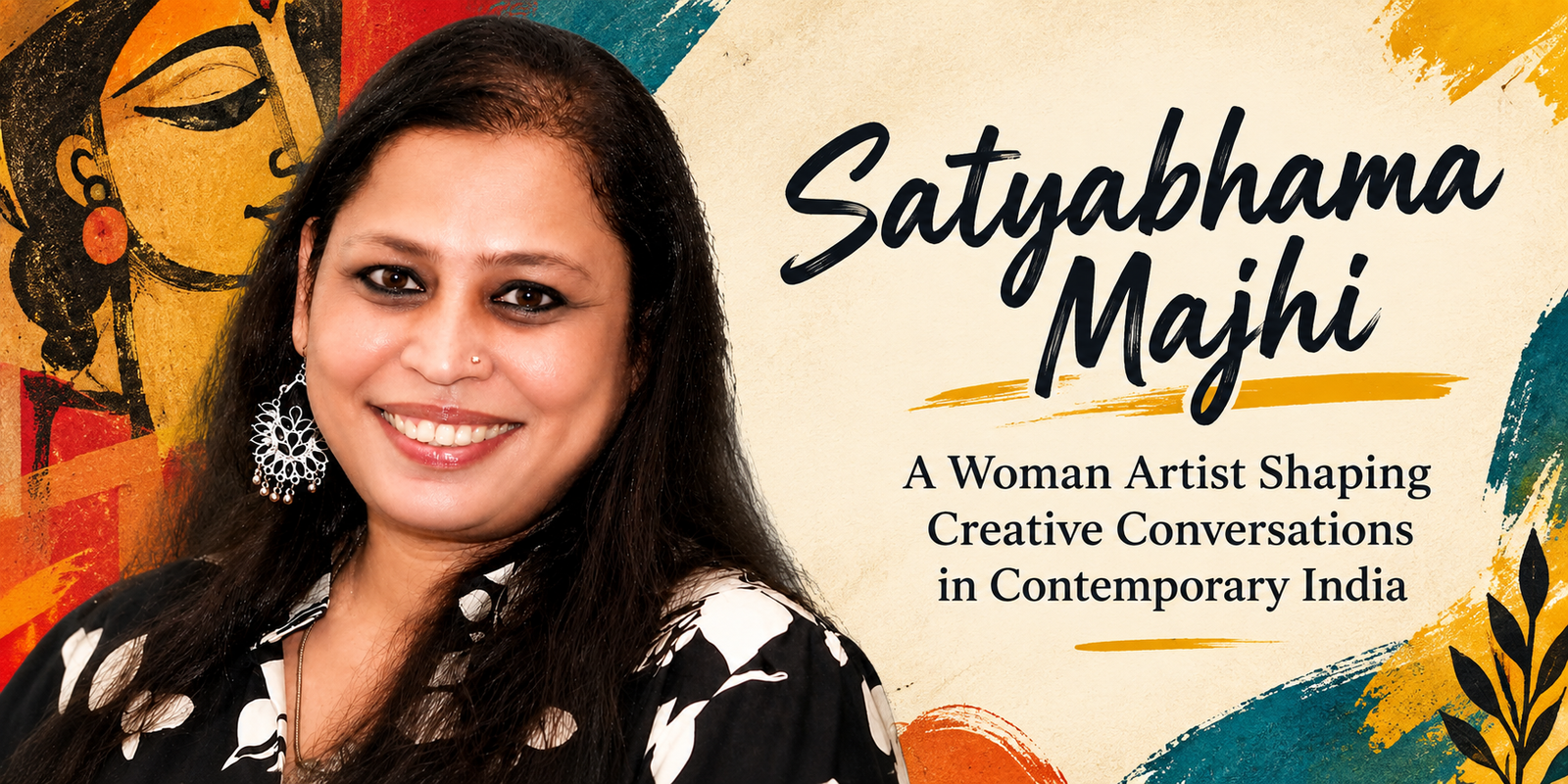
The contemporary artist is no longer defined only by the studio, the canvas, or the gallery. Across India, artistic practice increasingly extends into schools, neighbourhoods, public spaces, rural communities, cultural institutions, and collaborative projects. Odisha-based artist Satyabhama Majhi offers an interesting example of this expanded artistic role.
Active since the early 2000s, Majhi has developed a multidisciplinary practice encompassing painting, sculpture, installation, photography, mixed media, public art, community-based projects, and art education. Alongside her artistic work, she has also contributed as a curator, social activist, and cultural facilitator.
Her journey from studio-oriented artistic practice toward wider community engagement illustrates how contemporary art can become a process of interaction, learning, and participation.
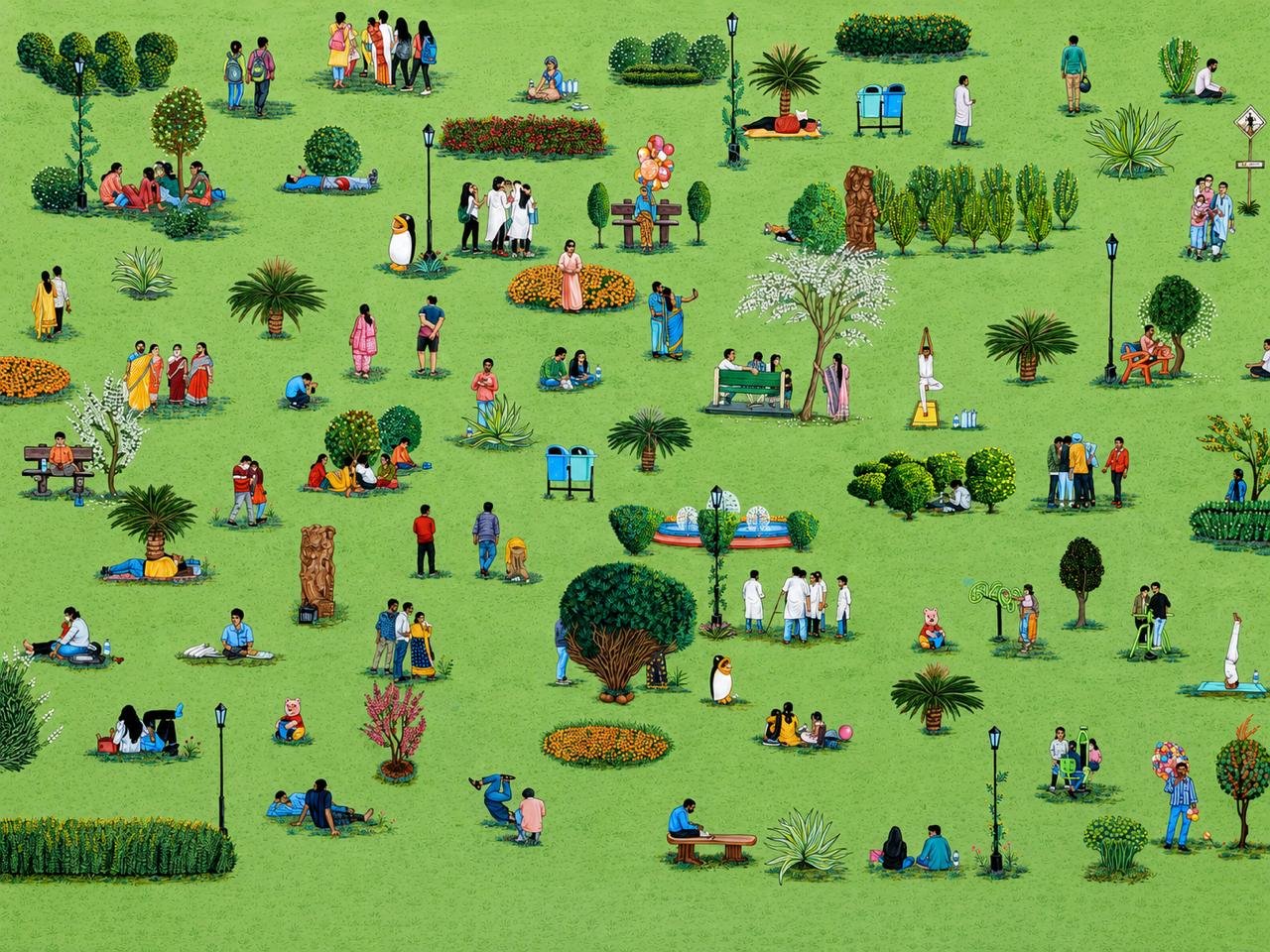
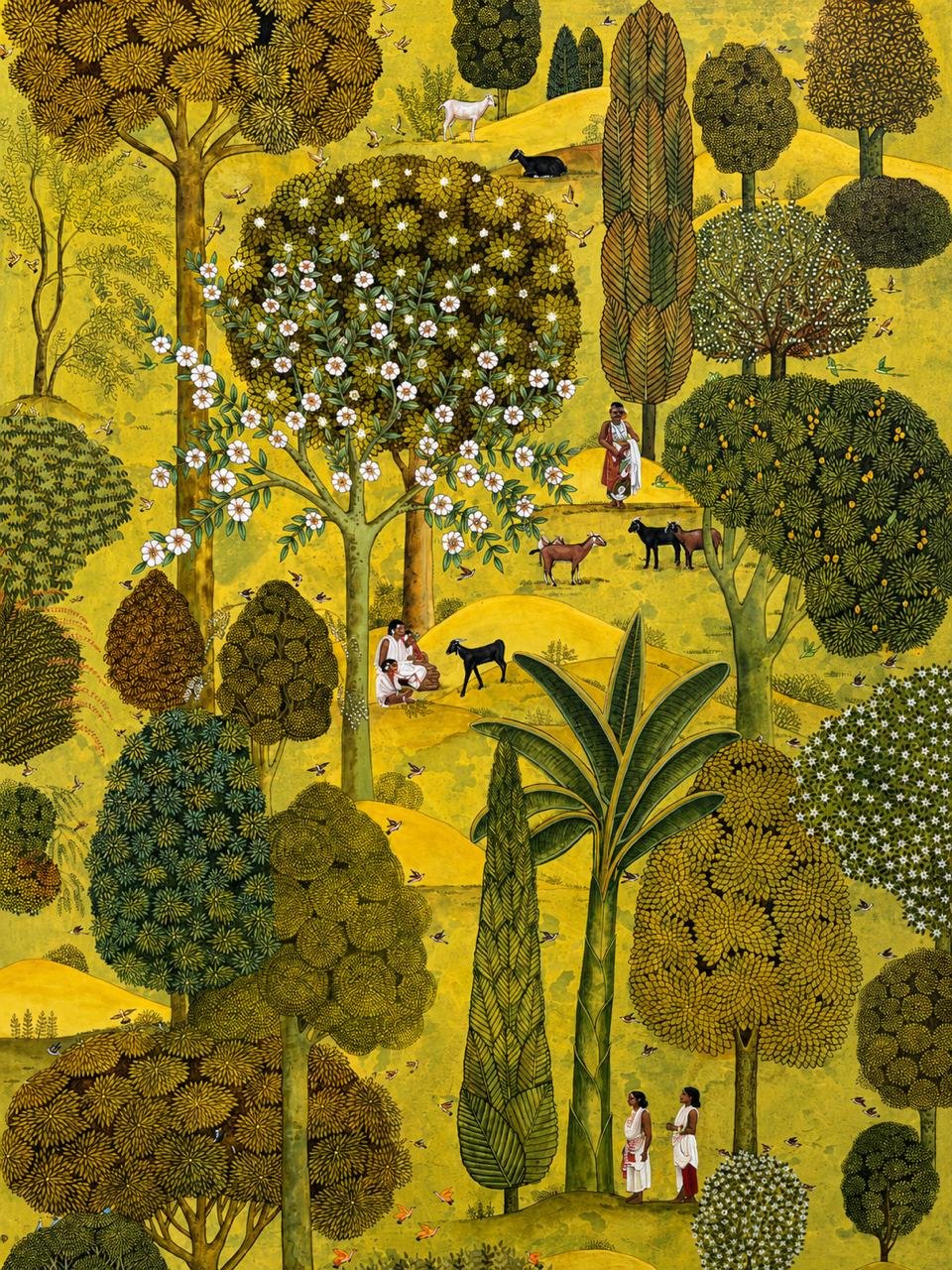
The Studio as a Starting Point
For many artists, the studio is where ideas are developed, materials are tested, and visual languages take shape. Majhi’s foundation in traditional art education provided her with an important starting point for this process.
Her M.F.A. in Traditional Art connected her with established approaches to visual expression, while her subsequent career opened possibilities for experimentation with contemporary forms and media.
Painting remained an important part of her practice, but it gradually became one component within a much broader artistic vocabulary.
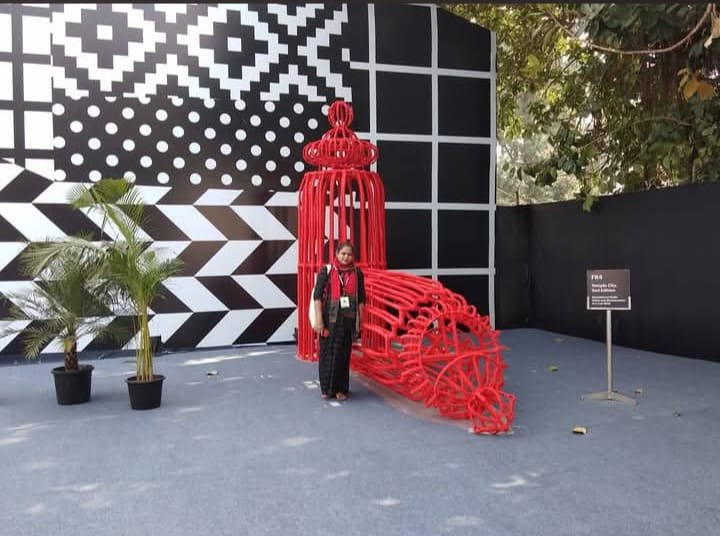
Sculpture, installation, photography, mixed media, public art, and community projects enabled her to respond to different subjects and environments.
Expanding Beyond the Canvas
The move beyond the canvas can be understood as an expansion of artistic possibilities rather than a rejection of painting.
A sculpture introduces physical presence. An installation can transform a space. Photography can document or reinterpret an environment. Mixed media can combine different forms of material expression.
Public art creates an entirely different relationship with an audience.
Majhi’s participation in murals and public-art initiatives in Odisha demonstrates how her practice can operate in spaces where people encounter art as part of everyday life.
The artwork is no longer confined to a gallery visitor. It becomes part of a neighbourhood, street, public building, or shared environment.
Community as a Creative Environment
Community-based art requires a different approach from conventional studio practice.
When working with communities, the artist must pay attention to local conditions, cultural practices, memories, relationships, and existing knowledge.
Majhi’s sustained engagement with the Dongaria Kondh community illustrates this approach.
Her interaction with the community over more than a decade has included attention to cultural practices, livelihood patterns, indigenous visual traditions, and relationships with the natural environment.
These experiences have influenced her artistic understanding of landscape, material, symbolism, and cultural memory.
Learning Before Representing
One of the important characteristics of community practice is the need to understand before interpreting.
Majhi’s work suggests an approach based on observation and listening.
Instead of treating a community simply as a visual subject, the artist can learn from its knowledge and experiences.
This is particularly important when working with indigenous cultures, where symbols, materials, landscapes, and practices may have meanings that are not immediately visible to an outside observer.
Long-term engagement allows those relationships to be understood in a broader context.
Niyamgiri and the Expansion of Artistic Thinking
The Niyamgiri landscape has played an important role in expanding Majhi’s artistic vocabulary.
Her engagement with the Dongaria Kondh community has influenced recurring forms and ideas in her work.
The triangle is one such visual element. Inspired in part by the silhouette of the Niyamgiri hills and associated with landscape, stability, sacred geography, and cultural symbolism, the form becomes more than a geometric shape.
It connects visual structure with a specific place and cultural experience.
This is an example of how community practice can influence studio-based artistic language.
Natural Materials and Shared Knowledge
Majhi’s use of natural pigments provides another connection between studio practice and community knowledge.
Chalk stone, charcoal, turmeric, geru soil, and brown stone have been used as sources of pigment.
Such materials connect artistic production with the physical environment and with traditional approaches to colour.
When brought into contemporary practice, they can acquire new visual and conceptual possibilities while retaining their relationship with place.
The material itself becomes part of the story.
The Classroom as an Artistic Space
Majhi’s community practice extends into education.
For approximately fifteen years, she has worked with children, schools, and educational communities through workshops and creative-learning initiatives.
These activities encourage children to observe their own surroundings and use personal experience as a source for art.
Instead of asking children simply to reproduce an image, her approach gives importance to what they have actually seen and remembered.
A tree, animal, festival, household activity, village journey, or family memory can become the basis of an artwork.
The classroom therefore becomes another kind of creative environment.
Art and Personal Experience
The emphasis on personal observation has a broader significance.
It suggests that artistic creativity does not belong exclusively to professionally trained artists.
Everyone experiences places differently. Children notice details adults may overlook. Communities carry memories that may not appear in official histories. Local environments contain stories that may disappear through rapid development.
By encouraging people to express what they see and remember, art can become a way of recognising these experiences.
Public Walls as Community Platforms
Majhi’s public-art practice demonstrates another stage in the movement from studio to community.
Large-scale murals in Odisha have allowed her to work directly within public environments.
Projects associated with Cuttack and Bhubaneswar, along with murals connected with sporting and cultural events, have brought visual art into shared spaces.
Works such as Pago and Thought Loom form part of this broader public dimension.
A wall can become a platform for visual communication and a point of connection between art and everyday life.
The Changing Audience
Moving from studio practice to community practice also changes the audience.
Gallery audiences may deliberately seek out contemporary art. Public audiences may encounter an artwork unexpectedly.
A person walking through a neighbourhood can experience a mural without having planned to see an artwork. A child attending a workshop can become a participant rather than simply an observer.
This expanded audience changes the possibilities of contemporary art.
It allows artistic experiences to reach people across different social and cultural environments.
Collaboration Rather Than Isolation
Community practice also changes the position of the artist.
The artist is no longer necessarily working in isolation.
Majhi’s activities have involved artists, artisans, children, communities, educational institutions, and cultural organisations.
Her role as a curator and cultural facilitator further supports this collaborative dimension.
The Sasatwa Foundation, where she serves as Secretary, is another context for her wider engagement with communities and educational and cultural environments.
From Local Engagement to National Projects
The transition from studio to community does not mean remaining limited to local settings.
Majhi’s participation in national projects demonstrates how community-oriented ideas can move into larger cultural spaces.
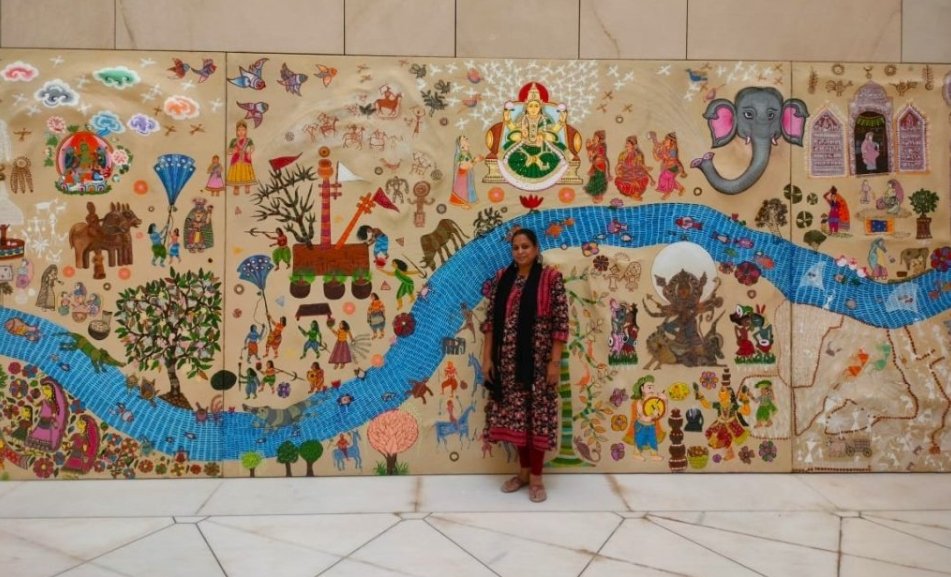
In 2023, she served as a Co-Sutradhar and creative contributor to People’s Wall – Jan, Janani and Janmabhumi.
The project was created for the New Parliament House through the Lalit Kala Akademi, New Delhi, and involved women artists and artisans from different regions of India.
The collaborative project brought regional visual traditions into a national cultural environment.
The Importance of Participation
Participation is one of the strongest links between Majhi’s different areas of practice.
Whether she is engaging with indigenous communities, conducting children’s workshops, creating public art, or participating in collaborative projects, the process involves some form of interaction.
This distinguishes community practice from simply creating an artwork about a community.
The community can become part of the artistic process itself.
Such participation can create opportunities for people to contribute knowledge, memories, skills, and perspectives.
Art as a Shared Experience
Majhi’s practice suggests that contemporary art can function as a shared experience.
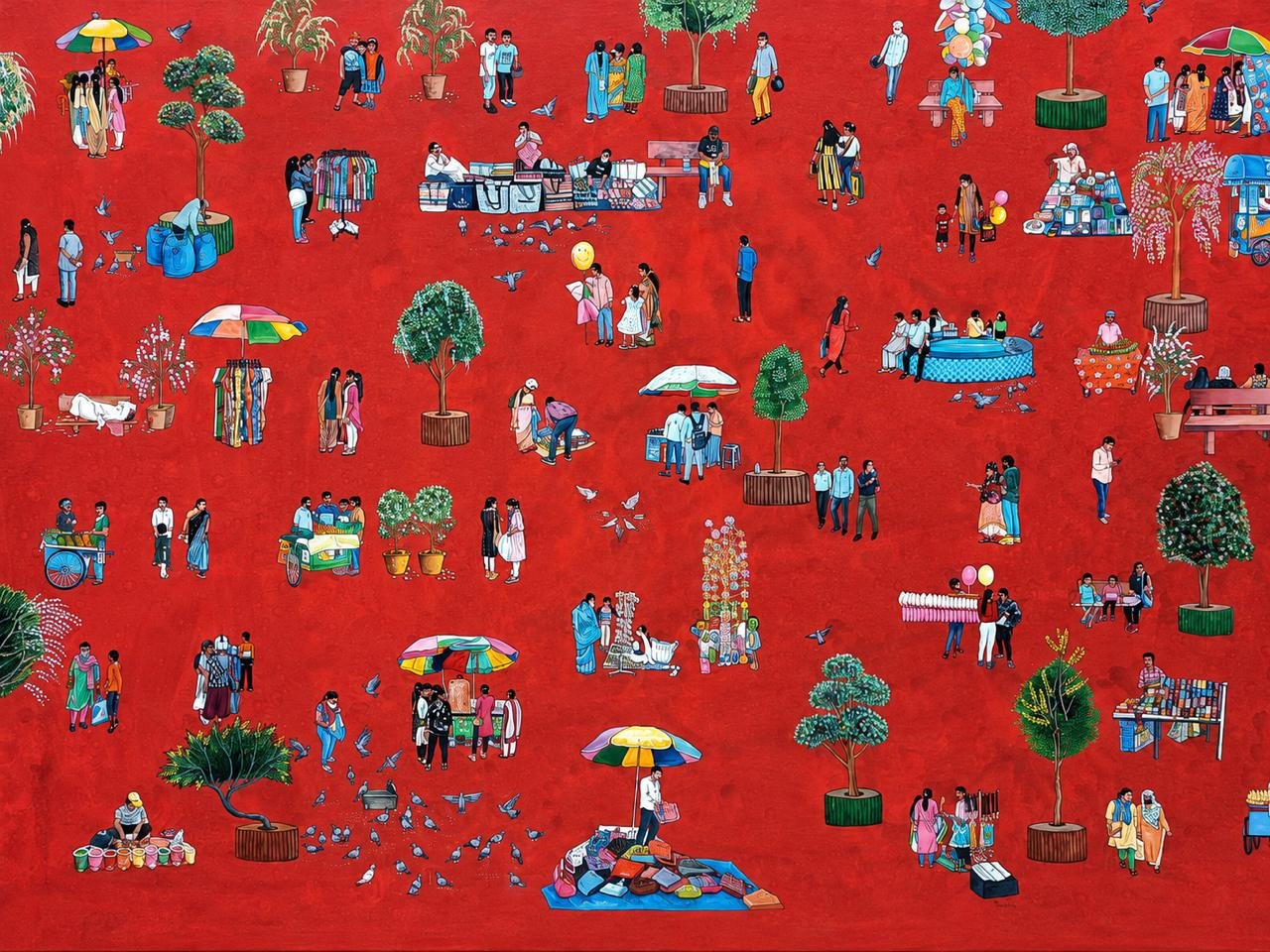
A painting can communicate an observation. A mural can transform a public environment. A workshop can encourage a child to see familiar surroundings differently. A collaborative project can bring together artistic traditions from different regions.
These outcomes may take different forms, but they share a common principle: art creates connections.
The Artist as Facilitator
This expanded practice changes the definition of artistic success.
It is not always measured only by an exhibition or an individual artwork.
An artist can also create value by facilitating participation, preserving cultural memory, encouraging creative learning, connecting artists and artisans, or making contemporary art accessible within public environments.
Majhi’s career demonstrates this broader role.
Her work combines artistic production with education, community engagement, curatorial activity, and cultural collaboration.
Balancing Individual and Collective Practice
Despite the importance of community, Majhi has maintained an individual artistic vocabulary.
Recurring themes of landscape, cultural memory, everyday life, ecology, traditional knowledge, and human relationships continue across her multidisciplinary work.
Community engagement does not erase individual artistic identity.
Instead, it provides additional experiences through which that identity can develop.
The result is a balance between personal artistic expression and collective cultural experience.
A Broader Understanding of Contemporary Art
Majhi’s journey reflects a wider transformation in contemporary Indian art.
Artists increasingly work across disciplines and environments, moving between studios, galleries, communities, public spaces, schools, residencies, and cultural institutions.
This expansion allows contemporary art to engage with questions that cannot always be addressed through a single painting or sculpture.
Issues of cultural memory, environmental relationships, indigenous knowledge, education, urban transformation, and community identity can become part of the artistic process.
Conclusion
Satyabhama Majhi’s journey from studio practice to community practice demonstrates how an artist’s role can expand over time.
Her traditional art education provided a foundation, while her multidisciplinary work opened new possibilities across painting, sculpture, installation, photography, mixed media, and public art. Her long-term engagement with the Dongaria Kondh community, work with children, public-art projects, curatorial activities, and collaborative national initiatives have further expanded her practice.
The movement beyond the studio has not meant moving away from art. Instead, it has broadened what art can mean.
For Majhi, a studio can be a place of creation, but so can a school, a village, a public wall, a cultural landscape, or a collaborative project.
Her practice demonstrates that contemporary art can be both an individual expression and a shared experience—and that the artist can be not only a maker, but also a listener, learner, educator, collaborator, and facilitator.