
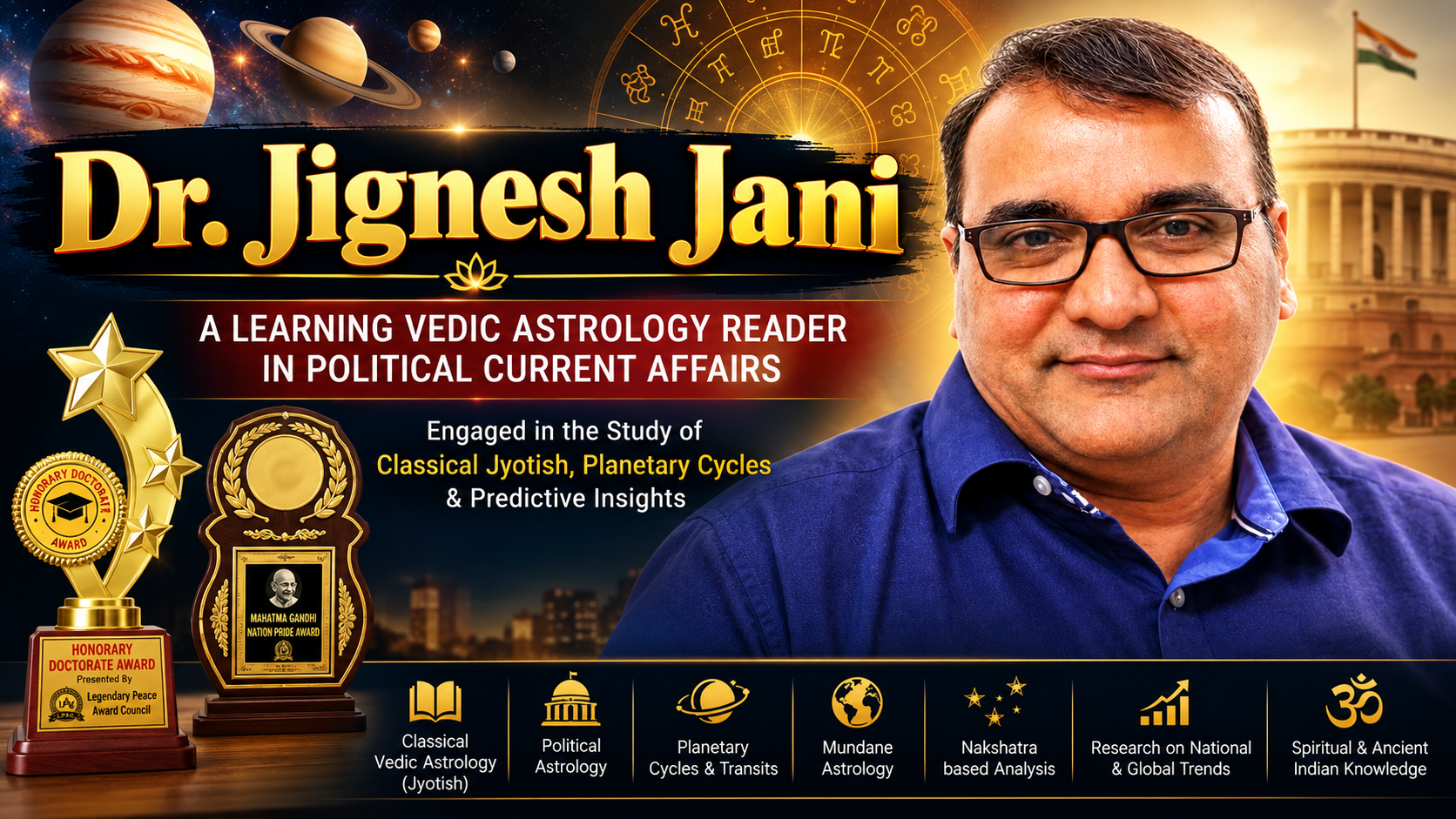
Ahmedabad, July 10: Vedic astrology researcher Dr. Jignesh Jani has shared his perspective on the symbolic relationship between planetary alignments and current global developments, stating that traditional Vedic astrology views the present period as one of significant transformation and important diplomatic choices. He emphasized that astrology should be understood as a symbolic system rooted in ancient traditions rather than a scientifically established method for predicting geopolitical events.
According to Dr. Jani, many Vedic astrologers interpret the ongoing Mars–Rahu conjunction (Angarak Yoga) as symbolizing assertive energy, strategic decision-making, military preparedness, and heightened geopolitical activity. He explained that throughout history, astrologers have associated this planetary combination with periods that demand careful leadership and responsible policymaking.
Dr. Jani also discussed the Saturn–Neptune alignment, which is interpreted by many astrological traditions as representing institutional restructuring, ideological transformation, changing international alliances, and shifts in global influence. He noted that these symbolic interpretations encourage reflection on how governments and societies respond to evolving political and economic circumstances.
Highlighting the role of Jupiter, Dr. Jani explained that the planet has traditionally been regarded in Vedic astrology as representing wisdom, ethics, justice, higher knowledge, and diplomacy. Many practitioners believe Jupiter symbolizes opportunities for dialogue, peaceful negotiations, and balanced leadership during times of uncertainty, making it an important influence in today’s international environment.
While discussing global affairs, Dr. Jani clarified that geopolitical developments arise from a combination of political decisions, economic conditions, technological progress, military strategies, and diplomatic initiatives. Astrology, he said, should complement thoughtful discussion rather than replace evidence-based geopolitical analysis.
“Planetary alignments offer symbolic insights into broader collective cycles, but they should never be interpreted as certainty,” Dr. Jignesh Jani said. “The future depends on the wisdom of governments, international institutions, and world leaders who choose dialogue, cooperation, and peaceful solutions over conflict.”
Dr. Jani concluded by encouraging responsible public understanding of astrology, urging people to distinguish traditional astrological interpretations from factual geopolitical analysis while supporting global efforts toward peace, stability, international cooperation, and sustainable development.